by Anthony Marco | Nov 2, 2025 | Product Labels
Did you know that up to 90 percent of consumers recognize a brand based on its packaging alone? The design choices you make for your labels influence everything from brand recall to shopper trust. In a world packed with options, a custom label is more than decoration—it acts as your silent business partner, helping you stand out, communicate reliability, and respond to shifting trends before the competition does.
Table of Contents
Quick Summary
| Takeaway |
Explanation |
| 1. Invest in custom label design |
Custom designs enhance brand recognition and create emotional connections with consumers. |
| 2. Use effective design for visibility |
High contrast, clear typography, and unique shapes improve product visibility on shelves. |
| 3. Ensure compliance and safety |
Comprehensive ingredient lists and clear warnings are essential for consumer protection and regulatory adherence. |
| 4. Adapt labels to market trends |
Modular and responsive labels allow for quick updates to reflect changing consumer preferences. |
| 5. Utilize labels as marketing tools |
Incorporating QR codes and interactive elements turns labels into engaging brand experiences. |
1. Enhance Brand Recognition with Custom Designs
Custom label designs are your secret weapon for making your brand memorable and instantly recognizable. According to research from visual branding studies, simplified visual identities dramatically improve consumer recognition and market competitiveness.
Your product’s label serves as a visual ambassador, communicating your brand’s personality and values in a single glance. When customers encounter your product, they should immediately connect the design with your unique brand story. How to Design Eye-Catching Custom Labels can help you master this critical visual communication.
To create powerful brand recognition, focus on developing a consistent visual language across your labels. This means selecting colors, fonts, and graphic elements that align with your brand identity. Some strategic approaches include:
- Choose a distinctive color palette that stands out on store shelves
- Use fonts that reflect your brand personality (bold and modern or elegant and classic)
- Incorporate unique graphic elements or logos that become instantly associated with your brand
Think about iconic brands like Coca-Cola or Apple. Their labels are so distinctive that consumers can recognize them from a distance. Your custom labels can achieve the same level of instant brand recall by investing in thoughtful, strategic design that tells your brand’s unique narrative.
Remember, great label design is not just about looking good it is about creating an emotional connection with your audience. A well-crafted custom label transforms a simple product into a memorable brand experience.
2. Increase Product Visibility on Store Shelves
In the crowded retail marketplace, your product labels are your frontline marketing warriors. Effective label design serves as a powerful sales tool that can transform passive browsing into active purchasing by capturing consumer attention instantly.
Research shows that labels do far more than simply provide information they create a visual narrative that can dramatically increase your product’s visibility and appeal. Price Point Sticker Strategies can further enhance your product’s shelf presence and attract potential buyers.
To maximize your product’s visibility, consider these strategic design approaches:
- Use high contrast color combinations that pop against standard store shelf backgrounds
- Implement clean typography that can be read quickly from a distance
- Create a unique silhouette or shape that stands out among competing products
- Incorporate eye catching graphic elements that draw immediate visual interest
Consistent label design across your product line creates a unified brand system. When customers see multiple products with a cohesive visual identity, recognition increases exponentially. This means each label becomes not just an individual product identifier but part of a larger brand ecosystem.
Think of your label as a silent salesperson working 24/7. Its job is to communicate your brand’s personality, quality, and value proposition in a split second of consumer attention. An outstanding label does not just describe your product it tells its story.
3. Boost Customer Trust with Professional Appearance
Custom labels are more than decorative elements they are silent ambassadors of your brand’s professionalism and commitment to quality. Research consistently shows that consistent and professional label design directly influences customer perception and builds trust.
When customers encounter a well designed label, they subconsciously associate its quality with the product itself. Custom Label Strategies can help businesses craft labels that communicate reliability and expertise.
To create a professional appearance that resonates with customers, consider these strategic design principles:
- Use clean typography that is easy to read and understand
- Select color schemes that reflect your brand identity
- Ensure high quality printing with crisp graphics and clear information
- Maintain visual consistency across all product lines
Advanced labeling strategies go beyond aesthetic appeal. They transform your packaging into a communication tool that speaks directly to your target audience. A professionally designed label tells customers you care about every detail of their experience.
Think of your label as a first impression. Just like a firm handshake or a well tailored suit, a meticulously crafted label signals competence, reliability, and attention to detail. By investing in professional label design, you are not just selling a product you are building trust.
4. Support Marketing Campaigns with Unique Labeling
Labels are no longer passive information carriers they are dynamic marketing tools that can amplify your brand message and create interactive consumer experiences. Dynamic labeling solutions transform ordinary packaging into powerful engagement platforms.
The Importance of Custom Labels in Branding reveals how strategic label design can become a cornerstone of your marketing strategy. Modern consumers crave more than just product information they want immersive brand interactions.
To leverage labels as marketing assets, consider these innovative approaches:
- Integrate QR codes that link to exclusive digital content
- Create limited edition label designs for seasonal campaigns
- Include scannable rewards or promotional codes
- Design labels with interactive elements that encourage social media sharing
Research shows that incorporating interactive elements like QR codes can dramatically increase consumer engagement. A well designed label becomes more than packaging it transforms into a gateway for deeper brand connection. Each scan, each glance becomes an opportunity to tell your brand story.
Think of your label as a mini marketing billboard. It is not just describing your product it is inviting customers into a broader narrative about your brand. By investing in unique labeling strategies, you turn every product into a potential marketing touchpoint.
5. Improve Operational Efficiency with Tailored Solutions
Operational efficiency is the backbone of successful business processes. Custom labels are not just aesthetic tools but strategic assets that can streamline your entire production workflow and reduce unnecessary complexity.
By implementing smart labeling strategies, businesses can transform their operational landscape. How to Design Eye-Catching Custom Labels offers insights into creating labels that work harder for your business.
To enhance operational efficiency through tailored label solutions, consider these critical approaches:
- Develop standardized label templates for consistent design
- Implement automated validation rules for label accuracy
- Create responsive label designs adaptable to multiple product formats
- Use digital labeling systems that integrate with existing inventory management platforms
Research demonstrates that adopting dynamic labeling solutions with responsive design elements can significantly improve adaptability across various product formats. This means less time spent on manual adjustments and more time focusing on core business objectives.
Think of your label design process as a precision instrument. Each template, each validation rule, each automated check is another gear in a well oiled operational machine. By investing in tailored labeling solutions, you are not just printing labels you are engineering efficiency.
6. Ensure Regulatory Compliance and Product Safety
Labels are more than marketing tools they are critical communication channels that protect consumers and demonstrate your business’s commitment to safety and transparency. Navigating the complex landscape of regulatory requirements requires strategic and thoughtful label design.
The Importance of Custom Labels in Branding highlights how comprehensive labeling goes beyond aesthetic appeal to serve crucial legal and safety functions. Each label is a legal document that must meet stringent industry standards.
To maintain regulatory compliance and prioritize product safety, implement these essential strategies:
- Include comprehensive ingredient lists with clear typography
- Highlight potential allergens and health warnings prominently
- Use universal design principles for enhanced readability
- Ensure accurate measurement and nutritional information
- Verify compliance with federal and state labeling regulations
Food and product labels serve dual purposes as both sales tools and critical information carriers. By incorporating universal design principles, you create labels that are not only legally compliant but also accessible to a diverse range of consumers.
Think of your label as a safety shield and communication bridge. It protects consumers by providing transparent information while building trust through your commitment to clarity and regulatory excellence.
7. Adapt Quickly to Market Trends and Customer Needs
In a rapidly changing marketplace, your ability to pivot and respond to emerging consumer preferences can mean the difference between thriving and merely surviving. Custom labels are powerful tools that enable businesses to communicate agility and responsiveness.
Why Local Bakeries Should Use Custom Printed Labels demonstrates how strategic labeling can help businesses stay ahead of market shifts. Responsive design is no longer a luxury it is a necessity for staying competitive.
To effectively adapt to market trends and customer needs, consider these strategic approaches:
- Design modular label templates that allow quick visual updates
- Integrate scannable technologies for real time product information
- Create seasonal or limited edition label variations
- Develop labels that can be easily modified across different product sizes
- Implement feedback mechanisms through interactive label elements
Research reveals that dynamic labeling solutions enable brands to engage consumers more effectively by creating flexible visual communication platforms. Your labels become living documents that can instantly reflect your brand’s current narrative and customer insights.
Think of your label as a communication canvas that breathes and evolves with your market. By embracing adaptability, you transform a simple label into a strategic business asset that keeps you connected with your customers changing desires.
Below is a comprehensive table summarizing the strategies and benefits discussed in the article about using custom label designs to enhance brand recognition, visibility, trust, and adaptability.
| Strategy |
Implementation |
Expected Results |
| Enhance Brand Recognition |
Use a consistent visual language with specific color palettes and fonts. |
Improved consumer recognition and a memorable brand experience. |
| Increase Product Visibility |
Implement high-contrast colors and unique shapes. |
Increased visibility on shelves and higher consumer engagement. |
| Boost Customer Trust |
Use professional design with clean typography and high-quality printing. |
Enhanced perception of quality and increased consumer trust. |
| Support Marketing Campaigns |
Integrate QR codes and create seasonal designs. |
Greater consumer interaction and extended brand engagement. |
| Improve Operational Efficiency |
Develop standardized templates and automated validation rules. |
Streamlined workflows and reduced complexity. |
| Ensure Regulatory Compliance |
Include clear ingredient lists and ensure design meets legal standards. |
Trust through transparency and legal compliance. |
| Adapt to Market Trends |
Design modular labels and integrate feedback mechanisms. |
Flexibility and responsiveness to changing consumer needs. |
Unlock Your Business Potential with Custom Labels from Print Cafe USA
You understand how critical a strong label design is for building brand recognition, increasing shelf visibility, and earning customer trust. The challenges businesses face when trying to create consistent, professional, and regulatory-compliant labels can feel overwhelming. But your label does more than identify it tells your story and connects with your customers on a deeper level. You want labels that adapt quickly to market trends and support your marketing campaigns while improving operational efficiency.

At Print Cafe USA, we bring over 40 years of printing expertise to help your brand thrive with custom label solutions. From vibrant, durable colors to inline die-cutting and lamination, our advanced printing technology and personalized service ensure your labels stand out and build trust. Explore how our Uncategorized Archives can guide your label design strategy today. Ready to elevate your brand identity with labels that do far more than stick? Visit us at Print Cafe USA and start turning your packaging into a powerful marketing and business tool now.
Frequently Asked Questions
How can custom labels enhance my brand recognition?
Custom labels can significantly boost your brand recognition by serving as visual ambassadors that convey your brand’s personality and values. To enhance this impact, focus on developing consistent design elements, such as colors and fonts, that align with your brand identity.
What design strategies can I use to increase my product’s visibility on store shelves?
You can increase your product’s visibility by using high-contrast color combinations and clean typography that can be read quickly from a distance. Implement these strategies to make your labels stand out, attracting consumers’ attention and potentially increasing sales conversion rates.
How do professional-looking labels build customer trust?
Professional-looking labels create an impression of reliability and quality, leading customers to associate them with your product’s overall value. To achieve this, use clean typography, quality printing, and consistent design across product lines to present a trustworthy brand image.
In what ways can labels support my marketing campaigns?
Labels can support marketing campaigns by incorporating interactive elements like QR codes or limited-edition designs that resonate with consumers. Offer exclusive content or promotions through these labels to engage customers and enhance their interaction with your brand.
How do tailored label solutions improve operational efficiency?
Tailored label solutions improve operational efficiency by streamlining workflows and reducing complexities in production. Consider implementing standardized templates and automated validation rules to minimize errors and speed up your labeling process by up to 30%.
What must I include to ensure my labels comply with regulations and prioritize product safety?
To comply with regulations and prioritize product safety, include comprehensive ingredient lists, clear typography, and health warnings on your labels. Make it a standard practice to verify that all product information meets legal requirements before printing to ensure consumer safety.
Recommended
by Anthony Marco | Nov 1, 2025 | Product Labels
Did you know that businesses using professionally printed booklets report up to 70 percent higher customer recall compared to those relying on single-page flyers? Booklets deliver a practical blend of detailed information and eye-catching design, making them a favorite for product guides, training manuals, and marketing materials. Discover how choosing the right booklet can transform your message into a polished, trusted resource that captures attention and builds credibility.
Table of Contents
Key Takeaways
| Point |
Details |
| Print Booklets Define Versatility |
Print booklets are compact multi-page documents that effectively communicate information and promote services, typically ranging from 8 to 48 pages. |
| Diverse Binding Options Offer Functionality |
Choosing the right binding style, such as saddle-stitched, perfect-bound, or wire-o, enhances the booklet’s professional appearance and suitability for specific business purposes. |
| Strategic Advantages of Printed Materials |
Printed booklets provide a tangible, high-value marketing asset that distinguishes businesses while allowing for comprehensive storytelling and brand representation. |
| Design Quality Impacts Perception |
Attention to design elements like layout, typography, and color significantly influences the effectiveness and professionalism of printed booklets. |
Defining Print Booklets And Core Concepts
A print booklet is a compact, multi-page printed document designed to share information, promote services, or communicate key messages for businesses. According to Wikipedia, a booklet is fundamentally “a small book or group of pages, often used for informational purposes, such as pamphlets or brochures”.
These versatile printed materials typically range from 8 to 48 pages and offer businesses a powerful communication tool. Unlike single-page flyers or extensive catalogs, booklets strike a perfect balance between providing comprehensive information and maintaining reader engagement. They can be used for various purposes such as product guides, training manuals, event programs, marketing collateral, and company portfolios.
Key characteristics of print booklets include:
- Professionally bound with staples, spiral binding, or perfect binding
- Full-color or black and white printing options
- Customizable page sizes (commonly 5.5" x 8.5" or 8.5" x 11")
- Ability to include detailed graphics, text, and visual content
With modern desktop publishing technologies, businesses can now create sophisticated booklets using specialized software, enabling more flexible and cost-effective production without always requiring commercial printing services. For businesses looking to create professional custom booklets, understanding these core concepts is the first step toward effective print communication.
Types Of Booklets And Business Applications
Businesses have several distinctive booklet types that serve unique communication and marketing purposes. According to PrintInTheBag, common booklet formats include perfect-bound, wire-o bound, and casebound booklets, each designed for specific professional applications.
Each booklet binding style offers unique advantages for different business needs. MyPrintEasy highlights that saddle-stitched and perfect-bound booklets are particularly versatile for creating event programs, catalogs, and comprehensive manuals. The choice of binding directly impacts the booklet’s durability, professional appearance, and functionality.

Primary Booklet Types and Business Applications:
-
Saddle-Stitched Booklets
- Ideal for shorter page counts (8-48 pages)
- Cost-effective for marketing materials
- Perfect for event programs, product guides
-
Perfect-Bound Booklets
- Mimics traditional book appearance
- Suitable for longer documents
- Excellent for annual reports, comprehensive catalogs
-
Wire-O Bound Booklets
- Allows flat laying and easy page turning
- Great for training manuals, instructional guides
- Enables easy updating and page replacement
For businesses exploring print communication strategies, brochures can complement booklet designs, providing additional flexibility in marketing and informational materials. Understanding these booklet types helps organizations select the most appropriate format for their specific communication goals.
Here’s a comparison of business booklet types and their typical uses:
| Booklet Type |
Typical Page Count |
Common Uses |
Key Advantages |
| Saddle-Stitched |
8-48 |
Event programs
Product guides |
Cost-effective
Quick binding |
| Perfect-Bound |
20+ |
Annual reports
Catalogs |
Professional look
Durable |
| Wire-O Bound |
10+ |
Training manuals
Instructional guides |
Lays flat
Easy page turning |
Key Advantages Of Printed Booklets
Printed booklets offer businesses a powerful and versatile marketing tool with numerous strategic benefits. According to MyPrintEasy, these documents provide a cost-effective way to produce full-color materials that simultaneously enhance professional image and communication effectiveness.
Comprehensive Business Advantages:
As GuruPrinters highlights, saddle-stitched booklets are particularly popular due to their professional appearance and cost-effectiveness compared to alternative marketing materials. This makes them an attractive option for businesses seeking impactful yet budget-conscious communication strategies.
For organizations looking to expand their marketing toolkit, event journals/programs can complement booklet strategies, providing additional channels for engaging potential clients and stakeholders. The key is selecting a format that aligns with your specific communication objectives and brand identity.
Design Factors And Print Quality Considerations
Creating a professional booklet requires meticulous attention to design and print quality elements that elevate your business communication. According to GuruPrinters, successful booklet design involves strategically selecting appropriate sizes, formats, and paper weights to ensure a polished and effective final product.
Critical Design Considerations:
-
Page Layout
- Consistent margins and alignment
- Clear visual hierarchy
- Balanced white space
- Intuitive navigation
-
Typography Selection
- Readable font styles
- Professional typeface choices
- Appropriate font sizes
- Consistent text formatting
MyPrintEasy emphasizes that successful booklet printing demands careful attention to design elements like color schemes, typography, and overall visual composition. These factors collectively determine the marketing material’s impact and perceived professionalism.
Businesses looking to refine their print materials can benefit from consulting a color printing cheat sheet to understand technical nuances that transform good design into exceptional visual communication. Ultimately, thoughtful design transforms a simple booklet into a powerful branding and informational tool.
Print Booklets Versus Digital Alternatives
Businesses today face a critical decision between traditional print booklets and digital marketing materials. Desktop publishing enables organizations to create documents in both formats, allowing strategic selection based on specific communication objectives and target audience preferences.
Comparative Strengths of Print and Digital Formats:
According to Wikipedia’s variable data printing research, printed materials offer unique personalization capabilities that digital platforms often struggle to replicate. The ability to create customized, tactile marketing collateral can significantly enhance audience engagement and brand perception.
For businesses exploring comprehensive marketing strategies, marketing product guides can provide additional insights into selecting the most effective communication tools. The key is understanding your specific audience and selecting the medium that best communicates your message.

Elevate Your Business Messaging with Custom Print Booklets
Understanding the power of print booklets is the first step toward creating meaningful connections with your audience. This guide highlights challenges like selecting the right booklet type and ensuring professional design to boost your marketing impact. If you want to overcome these hurdles and craft durable, engaging materials that represent your brand with polish and clarity, Print Cafe USA offers expert printing solutions tailored to your needs.
Explore our wide range of print services including booklets and catalogs, designed with precision and care to bring your ideas to life. Benefit from over 40 years of experience combined with cutting-edge technology to achieve vibrant, high-quality results that impress. Don’t wait to strengthen your brand presence with print material proven to captivate and inform. Connect with us at Print Cafe USA today to start your custom booklet project and experience reliable, personalized service that helps your business thrive.
Frequently Asked Questions
What is a print booklet and its main purpose?
A print booklet is a compact, multi-page printed document designed to share information, promote services, or communicate key messages for businesses. They typically range from 8 to 48 pages and serve various purposes like product guides, training manuals, and marketing collateral.
What are the different types of print booklets available for businesses?
Common types of print booklets include saddle-stitched, perfect-bound, and wire-o bound. Each type has specific advantages for different applications, such as event programs, annual reports, or training manuals.
Printed booklets offer tangible, physical marketing assets, higher perceived value, less digital noise, and a memorable sensory experience. They can enhance audience engagement and brand perception in ways that digital formats may not replicate.
How can I ensure the quality of my printed booklet’s design?
To achieve high-quality printed booklets, focus on critical design considerations like consistent page layout, typography selection, and overall visual composition. Careful attention to these elements can significantly impact the effectiveness and professionalism of your final product.
Article generated by BabyLoveGrowth
by Anthony Marco | Nov 1, 2025 | Product Labels
Nearly 60 percent of buyers say product labels influence their purchasing decisions. The difference between a label that attracts attention and one that gets overlooked often starts long before printing begins. Clear planning and the right production steps can make your labels stand out on the shelf while staying compliant with industry standards. Discover how each stage of the label printing process leads to results that look good and perform even better.
Table of Contents
Quick Summary
| Key Point |
Explanation |
| 1. Define clear label specifications |
Documentation of dimensions, colors, and materials ensures labels meet visual and regulatory standards. |
| 2. Choose suitable materials and printing |
Material selection impacts durability and aesthetics; consider environmental conditions when deciding. |
| 3. Prepare files accurately for printing |
Use professional formats and include embedded color profiles to ensure precise printing. |
| 4. Conduct thorough test prints |
Reviewing samples helps identify color issues and ensures label functionality before full production. |
| 5. Implement a structured final inspection |
A checklist for quality assessment ensures every label meets required specifications and avoids costly errors. |

Step 1: Define Label Requirements and Artwork Specifications
Defining precise label requirements and artwork specifications is your foundational step to creating professional printed labels that communicate your brand effectively. This critical phase sets the stage for accurate label production and ensures your final product meets both visual and regulatory standards.
Start by documenting your label specifications with absolute clarity. According to FDA, manufacturers must ensure labeling meets key requirements including legibility and proper adhesion. Your specification document should outline critical details such as:
- Label dimensions (exact width and height)
- Color specifications (using Pantone or CMYK codes)
- Material type (paper, vinyl, polyester)
- Required text and graphic elements
- Minimum font sizes
- White space requirements
- Bleed and trim margins
If you are creating labels for regulated products like medical devices or food packaging, pay extra attention to compliance. As EPA guidelines suggest, your electronic artwork should be created directly from source documents with embedded fonts to guarantee precise formatting.
Pro Tip: Always request a digital proof before final production. This allows you to catch potential design or specification errors early and prevents costly reprinting.
Next, you will move into the actual artwork creation process armed with your detailed specifications. Your precise planning now will translate directly into clean professional label designs that represent your brand with precision.
Step 2: Select Materials and Printing Technology
Selecting the right materials and printing technology is a pivotal step in creating professional labels that stand up to your business needs. Your choices here will directly impact the durability, appearance, and overall effectiveness of your final product.
According to Zaparoo, choosing the right combination of design, materials, and printing technique is essential for high-quality labels. Start by evaluating your specific requirements. Consider factors like:
- Environmental conditions (moisture, temperature, sunlight exposure)
- Expected label lifespan
- Surface where label will be applied
- Budget constraints
- Color vibrancy needs
For printing technology, you have multiple options. Inkjet printers work well for small batches and detailed graphics, while laser printers offer faster production and more consistent color. For larger volume or professional grade labels, commercial printing services provide superior quality and specialized material options.
As Massachusetts Government recommends, collaborating with graphic designers and professional printers can help you select the most appropriate materials and printing technologies to meet both design and regulatory requirements.
Pro Tip: Always request material samples and test print proofs before committing to a large print run. This allows you to verify color accuracy, adhesive performance, and overall label quality.

With your materials and printing technology selected, you are now ready to move forward to the next critical stage of your label production workflow.
Configuring press settings and preparing your digital files is a critical step that bridges your design vision with actual label production. This phase requires precision and attention to technical details to ensure your final printed labels match your original creative concept.
According to Nocturama, final composite artwork should be supplied in professional formats like Adobe Illustrator or InDesign, with images set at specific resolutions and embedded ICC color profiles. This ensures accurate color reproduction across different printing platforms. Your file preparation should include:
- High resolution image files (typically 300 dpi)
- Embedded color profiles
- Converted text to outlines or font files included
- Flattened layers
- Correct color mode (CMYK for print)
As EPA guidelines recommend, create PDF files directly from source documents with all fonts embedded and no security restrictions. This guarantees that your design will print exactly as you intended, preventing potential formatting errors or font substitution issues.
Pro Tip: Always perform a digital preflight check on your files to identify and resolve potential printing problems before submitting your artwork. Most professional print services offer this verification step.
With your files meticulously prepared and press settings configured, you are now ready to move into the actual printing stage of your label production workflow.
Step 4: Run Test Prints and Review Samples
Running test prints and meticulously reviewing samples is your quality control checkpoint in the label printing workflow. This crucial step helps you catch potential issues before committing to a full production run and ensures your final labels meet both aesthetic and functional requirements.
According to Zaparoo, conducting test prints helps identify critical issues like color discrepancies, paper jams, or ink smears. During your review, pay close attention to:
- Color accuracy and consistency
- Text clarity and readability
- Material durability
- Adhesive performance
- Overall visual design
As Massachusetts Government recommends, involve key stakeholders in reviewing label samples to ensure the design meets both visual expectations and regulatory requirements. This collaborative approach can help you catch nuanced details that might otherwise go unnoticed.
Pro Tip: Create a systematic checklist for your sample review process. This will help you evaluate each label objectively and ensure no critical aspects are overlooked during your quality assessment.
With your test prints thoroughly reviewed and any necessary adjustments made, you are now prepared to move forward with confidence into full label production.
Step 5: Approve Final Production and Inspect Finished Labels
Approving final production and meticulously inspecting finished labels is your ultimate quality assurance checkpoint. This final stage ensures that every label meets your exact specifications and represents your brand with precision and professionalism.
According to FDA, manufacturers must incorporate robust quality assurance programs to ensure labeling meets critical requirements including legibility and adhesion. During your final inspection, focus on comprehensive evaluation across multiple dimensions:
- Color consistency and vibrancy
- Print clarity and sharpness
- Material integrity and durability
- Adhesive performance
- Accurate placement of design elements
- Compliance with original design specifications
As Massachusetts Government recommends, double-check critical elements like legal language, nutritional information, and application ease before giving final approval. A thorough review now can prevent costly reprints or potential regulatory issues down the line.
Pro Tip: Create a structured inspection checklist with specific pass or fail criteria. This systematic approach helps remove subjective interpretation and ensures consistent quality across label production runs.
Once you have thoroughly verified and approved your finished labels, you are ready to deploy them with confidence in your brand representation.
Streamline Your Label Printing with Expert Support from Print Cafe USA
Managing the complexities of label printing can feel overwhelming. From defining detailed specifications and choosing the right materials to configuring press settings and approving final production, every step demands precision and expertise. You need a partner who understands the challenge of balancing quality, compliance, and speed while protecting your brand’s reputation.
At Print Cafe USA, we specialize in simplifying your label printing workflow. With over 40 years of experience and state-of-the-art printing technology, we deliver vibrant, durable labels tailored to your exact needs. Whether you are preparing artwork or testing samples, our comprehensive Uncategorized Archives offer insights, and our dedicated team ensures flawless execution from start to finish.
Ready to transform your label printing process? Visit us at Print Cafe USA to explore custom solutions that safeguard your brand and accelerate your business success. Contact our experts today to get personalized guidance and fast turnaround on your next print project.
Frequently Asked Questions
How can I define label requirements for my printing project?
Defining label requirements starts with documenting specifications such as dimensions, materials, and text. Create a clear specification document that outlines all critical details to ensure accurate production.
What materials should I consider when selecting for label printing?
Select materials based on the environment and intended use of your labels. For example, if labels will be exposed to moisture, consider waterproof options to enhance durability and longevity.
What steps should I take to prepare my files for print?
Prepare files by ensuring they are in high resolution, with the correct color mode and all fonts embedded. Use professional software to create PDFs that will guarantee your designs print exactly as intended.
Why is running test prints important in the label printing process?
Running test prints helps you catch issues like color discrepancies and material performance. Conduct a thorough review of these prints to ensure text clarity and overall quality before moving to full production.
How do I conduct a final inspection of my printed labels?
Conduct a final inspection by checking for color consistency, print clarity, and accurate placement of design elements. Use a detailed checklist to evaluate each label against your specifications before approval.
Article generated by BabyLoveGrowth

by Anthony Marco | Oct 30, 2025 | Product Labels
1. Business Cards: Small but Powerful Branding Tools
Business cards are still one of the most effective marketing essentials. They’re portable, personal, and professional — a simple way to make your first impression unforgettable.
A custom printed business card does more than share your contact details; it communicates your brand identity through design, color, and texture. Adding finishes like foil stamping, spot UV, or soft-touch coating turns a basic card into a tactile experience that leaves a lasting mark.
Business cards are perfect for:
2. Brochures and Flyers: Educate and Inspire Action
When you need space to tell your story, brochures and flyers are the go-to tools. They combine visual appeal with valuable information, helping customers understand what makes your brand different.
Use brochures to outline products, services, and pricing in detail, and flyers for quick, event-driven promotions. Both are powerful tools for:
-
Trade shows and expos
-
Retail handouts
-
Direct mail campaigns
At Print Cafe USA, our full-color brochure printing brings your message to life with vibrant images and clean, professional layouts.
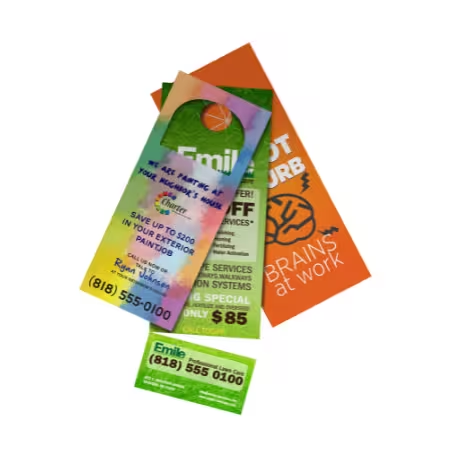
3. Door Hangers: Direct, Personal, and Effective
Few marketing materials have the personal touch of a door hanger. Hanging directly on the customer’s door ensures your message gets seen — no competition, no scrolling.
Door hangers are ideal for:
Include coupons or tear-off sections to make them even more interactive and trackable. When done right, door hangers deliver high visibility and a tangible connection with your audience.
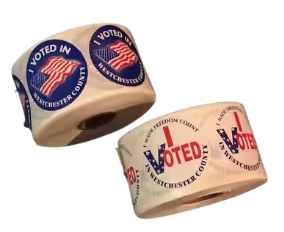
4. Labels and Stickers: Branding That Travels
Labels and stickers are mini billboards that stick around — literally. They’re cost-effective, customizable, and perfect for both packaging and giveaways.
Custom printed labels help you maintain brand consistency across products, while stickers can serve as promotional tools at events or inside shipments.
Common uses include:
With Print Cafe USA, you can choose from paper or BOPP materials, add lamination, or opt for die-cut shapes to create durable, eye-catching designs.
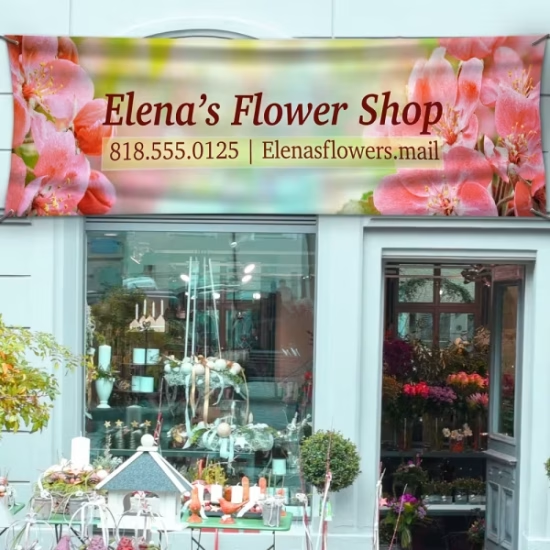
5. Signs, Posters, and Banners: Visibility That Works
Large-format printing gets your message noticed instantly. Whether for an indoor trade show or outdoor event, banners and signs give your business the bold presence it deserves.
Choose from vinyl banners, retractable stands, or foam board posters to make your display both professional and portable.
They’re ideal for:
Well-designed banners not only draw attention — they reinforce your credibility at a glance.
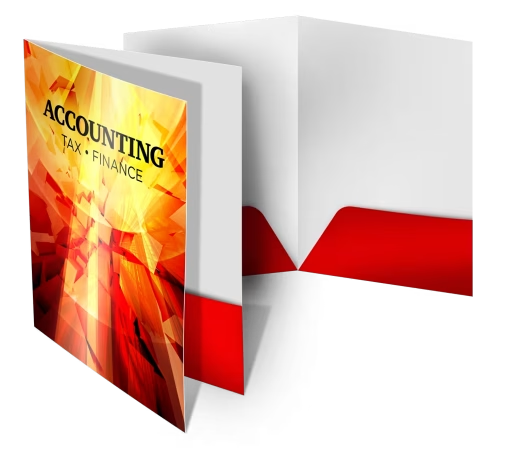
6. Presentation Folders and Catalogs: Organized and Professional
Presentation folders and catalogs demonstrate attention to detail. They keep your materials neat while highlighting your brand’s professionalism.
Custom printed folders are great for meetings, proposals, and marketing kits, while product catalogs give customers a convenient reference to browse your offerings.
Best uses include:
-
Corporate sales presentations
-
Product line introductions
-
Real estate listings or educational materials
A polished presentation inspires trust — and that trust turns into sales.
7. Custom Packaging: Where Branding Meets Experience
Your packaging is often the first tangible touchpoint your customer has with your brand. Custom printed packaging such as boxes, header cards, and stand-up pouches not only protect your products but also reinforce your brand identity.
Packaging influences perception, and professionally printed materials make your products look more valuable, organized, and trustworthy.
Use it to enhance:
8. Event Materials: Create Experiences, Not Just Events
Event marketing is all about experience. Whether it’s a fundraiser, corporate gala, or trade show, your printed materials — tickets, journals, programs, and signage — help set the tone.
High-quality event materials reflect your professionalism and enhance attendee engagement. Use them to build anticipation before the event and lasting impressions afterward.
The Lasting Power of Print in a Digital World
Digital marketing is fast, but print marketing is memorable. Physical materials create trust, inspire emotion, and keep your brand visible long after an ad campaign ends.
When done right, printed marketing products:
In a world overloaded with online content, print helps your business feel real — it’s tangible proof of who you are.
Partner with Print Cafe USA
At Print Cafe USA, we combine over 40 years of experience with modern printing technology to deliver marketing products that drive growth. From design to delivery, we focus on quality, precision, and customer satisfaction.
We specialize in:
-
Full-color digital and offset printing
-
Flexographic and label production
-
Custom packaging and signage solutions
Our facilities in Virginia, Long Island, and New Jersey allow us to serve clients nationwide — quickly, efficiently, and always on time.
Ready to Grow Your Business?
If you’re ready to take your marketing to the next level, Print Cafe USA can help. From business cards to banners and everything in between, we make sure your brand stands out where it matters most — in the hands of your customers.
📞 Contact Print Cafe USA today at 516-455-8019 to get started and see how professional printing can help your business grow.
by Anthony Marco | Oct 22, 2025 | Product Labels
Introduction
In a world dominated by digital media, printed catalogs remain one of the most effective tools for building trust, engagement, and brand identity. Whether it’s a product catalog, a lookbook, or a corporate brochure, nothing compares to the tactile experience of flipping through beautifully printed pages.
At Print Cafe USA, we specialize in custom catalog printing that combines craftsmanship, color accuracy, and reliability. In this article, we’ll walk you through how catalogs are made — from the first design concept to the final printed product.
Step 1: Planning & Concept Development
A great catalog starts with a clear purpose. Before the design begins, the planning stage defines the direction of your project:
-
Goal: Is your catalog meant to sell products, inform clients, or build brand awareness?
-
Audience: Tailor your tone and visuals to your readers — a retail shopper and a B2B buyer expect different experiences.
-
Size & Page Count: Determine the number of pages and the layout format early.
-
Distribution: Will it be mailed, displayed, or handed out? The answer affects your choice of paper weight and binding style.
At Print Cafe USA, we help businesses define these details up front to ensure a smooth, cost-efficient production process.
Step 2: Content Creation & Photography
High-quality images and clear, engaging content make or break a catalog.
Your photography should showcase your products accurately and consistently, while copywriting should communicate benefits in a tone that matches your brand.
Pro Tip 💡: Always use high-resolution images (300 DPI or higher) for print quality. Print Cafe USA checks every image and layout to ensure your final catalog looks professional and pixel-perfect.
Step 3: Design & Layout
This is where creativity and structure meet. A catalog layout must balance eye-catching visuals with easy navigation.
Our designers (or yours) use a grid-based design system to keep everything aligned and polished. Key considerations include:
-
Cover Design: Your cover sets the tone. Make it bold, clean, and on-brand.
-
Typography: Use consistent, readable fonts for a professional look.
-
Color Consistency: We ensure your brand colors print accurately every time.
-
White Space: Clean spacing makes content easier to read and visually appealing.
Before print, our prepress specialists check every file for bleed, trim, resolution, and color accuracy to ensure a flawless print run.
Step 4: Proofing & Revisions
Once your catalog is designed, we send a digital or printed proof for review. This step allows you to verify:
-
Text accuracy
-
Image placement
-
Page sequence
-
Color reproduction
At Print Cafe USA, we don’t print until you’re 100% satisfied. Proofing prevents costly mistakes and ensures your catalog looks exactly as you envisioned.
Step 5: Printing
This is where your catalog comes to life. Using state-of-the-art equipment, we offer both digital and offset printing to meet your quantity, budget, and quality needs.
Each catalog is printed using premium inks and paper stocks, ensuring vibrant color, crisp detail, and consistent quality across every page.
Step 6: Binding Options
Once printed, your pages are bound into a polished, professional catalog. We offer several binding styles:
-
Saddle Stitching: Stapled spine, great for catalogs up to 64 pages.
-
Perfect Binding: Clean, square spine for thicker, high-end catalogs.
-
Coil or Wire-O Binding: Allows pages to lay flat for hands-free reading.
Our team helps you choose the best binding method based on your project’s purpose and design.
Step 7: Finishing Touches
Finishing gives your catalog its final professional touch. Choose from:
-
Gloss or Matte Coating: Adds protection and style.
-
Soft-Touch Lamination: A premium, velvety finish your customers will love.
-
Spot UV or Foil Stamping: Adds shine and texture to logos or key visuals.
-
Embossing/Debossing: Elevates your brand with dimensional detail.
These custom finishes enhance your catalog’s appearance and durability while leaving a memorable impression.
Step 8: Quality Control & Delivery
Before shipping, every catalog is inspected for print quality, alignment, and binding integrity. Nothing leaves our facility without meeting our quality standards.
Print Cafe USA is proud to be known for on-time, nationwide delivery — whether you need a small batch for a trade show or a large run for retail distribution.
Step 9: Why Printed Catalogs Still Matter
In the digital era, physical marketing materials create deeper connections. Printed catalogs offer a tactile, immersive experience that builds credibility and keeps your brand top-of-mind.
Research shows customers are more likely to engage with printed catalogs, spend more time browsing, and even make online purchases afterward. A well-made catalog complements your digital strategy — not competes with it.
Partner with Print Cafe USA
At Print Cafe USA, we understand that your catalog is more than a product list — it’s your brand story in print. We bring together expert design support, cutting-edge printing technology, and dependable delivery to ensure every catalog reflects your business at its best.
Whether you need 50 or 50,000 copies, we handle every detail — from concept to completion — so you can focus on growing your brand.
📘 Ready to start your next catalog project?
Contact Print Cafe USA today to request a quote and discover how we make catalog printing easy, reliable, and exceptional.